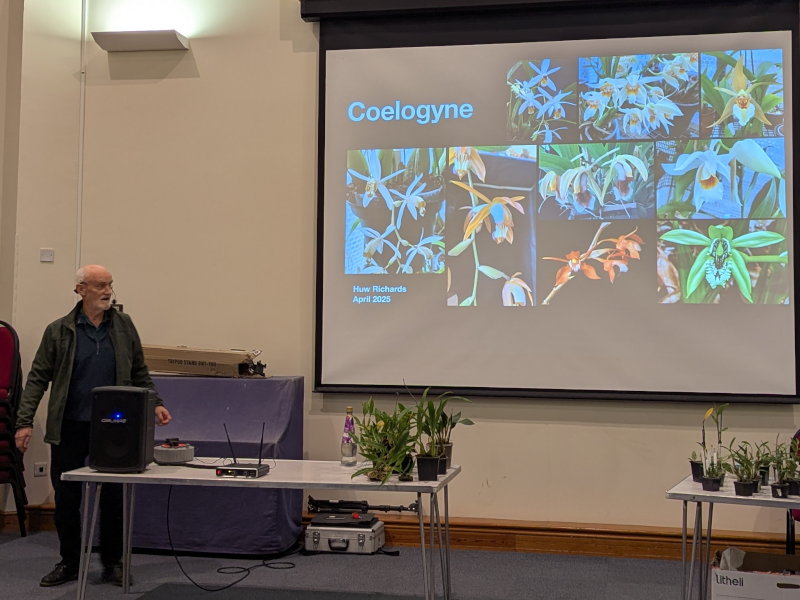
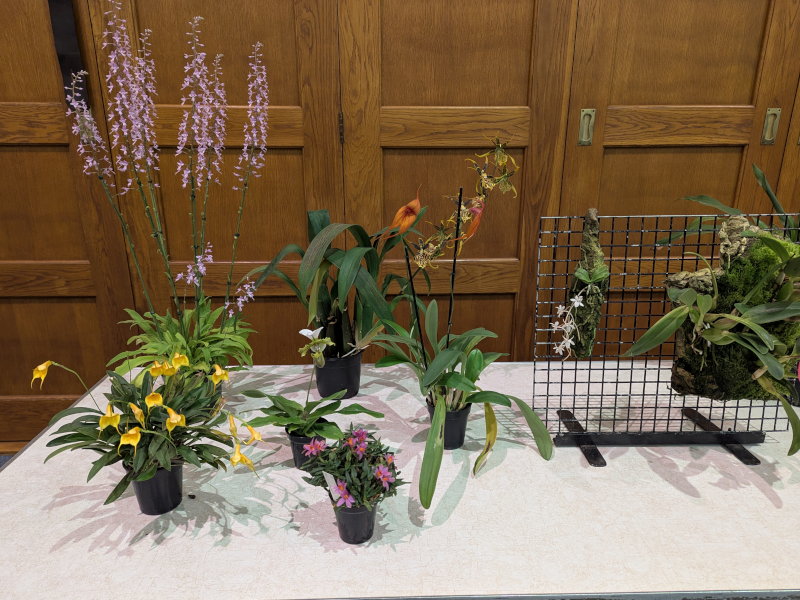
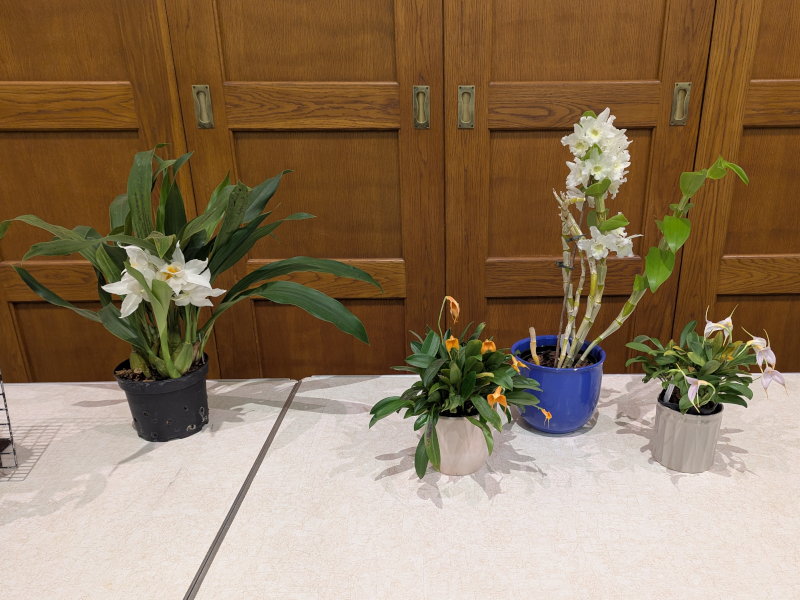
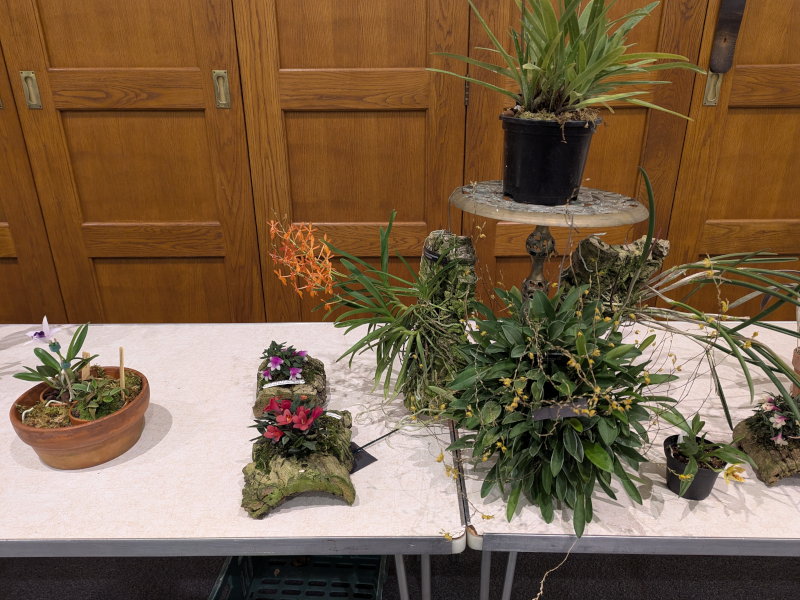
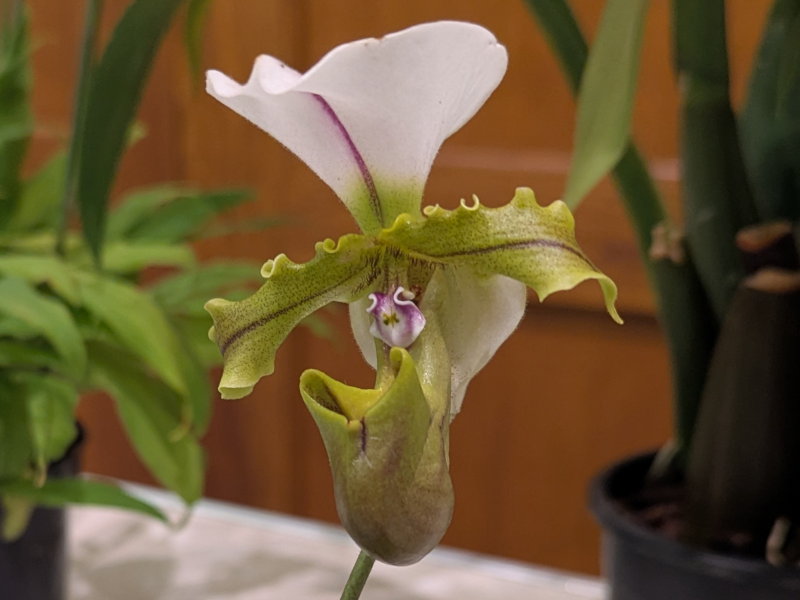
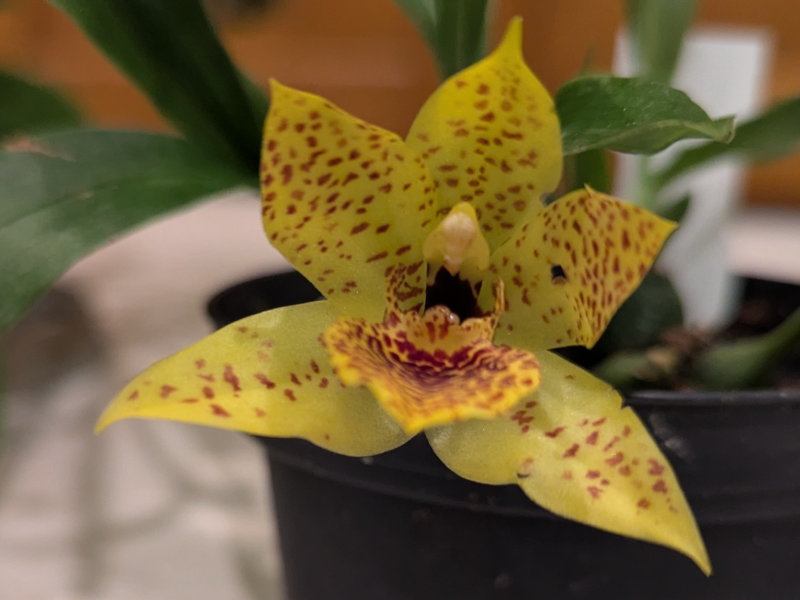
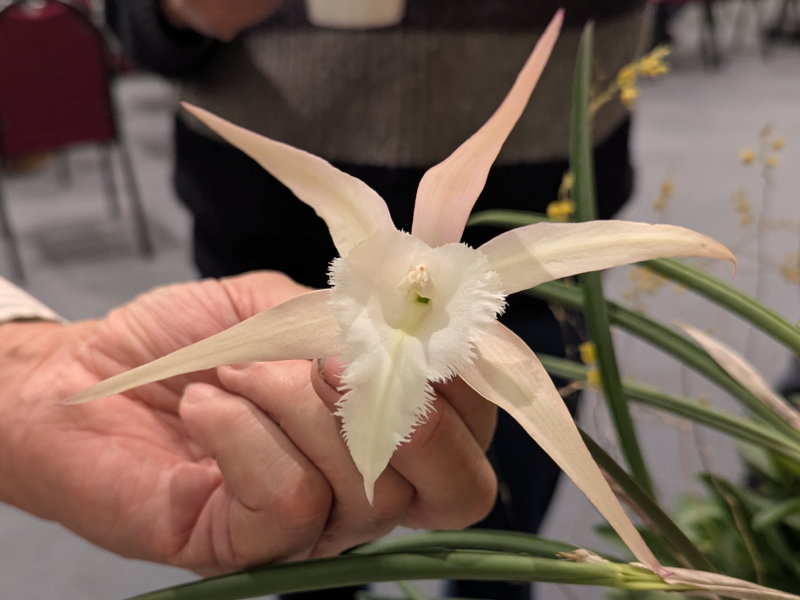
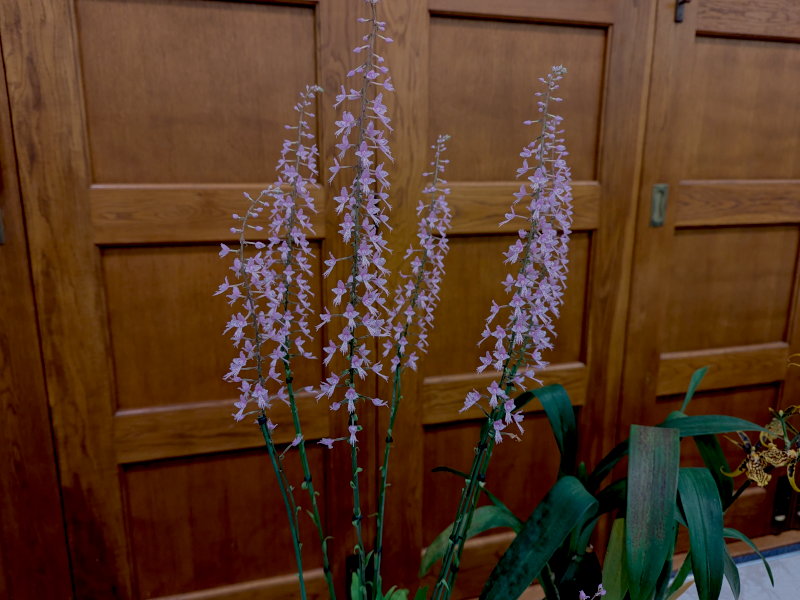
Our guest at our October meeting was Huw Edwards, who says “I’m not an expert” on Coelogynes but nevertheless grows about 35 species and gave a very knowledgeable talk about them, accompanied with excellent slides. They originate from South-East Asia and the ‘type species’ is C. cristata. The various species flower in four different ways:
- Heteranthous: Flower spikes emerge from the base of a mature pseudobulb/growth (e.g. C. cristata).
- Hysteranthous: Flower spikes emerge from the top of a mature pseudobulb between or at the apex of the terminal leaves, often after growth completes at the end of the season (e.g. C. lawrenceana).
- Proteranthous: Flower spikes appear on a terminal rhizome node or precede new leaf/shoot growth (e.g. C. fuscescens).
- Synanthous: Flower spikes develop alongside emerging leaves on immature/developing growth (e.g. C. pandurata).
The taxonomy of the group has been the subject of dispute; currently the ‘lumpers’ are in the ascendant over the ‘splitters’ [so for example taxonomists have merged Dendrochilum, Pholidota and Chelonistele into Coelogyne]. There are about 60 species in cultivation, plus another 60 if the ‘lumped’ genera are included. The species originate from a wide variety of environments and so include cool, intermediate and warm growing types. They need plenty of water in the growing season, and (mostly) good light. Propagation is by division, although they may sulk for a while afterwards. Brown leaf tips suggest a need for higher humidity.
Huw then briefly reviewed various species, of which confusa, puchella, lentiginosa and ecarinata were particularly appealing [in my subjective opinion].
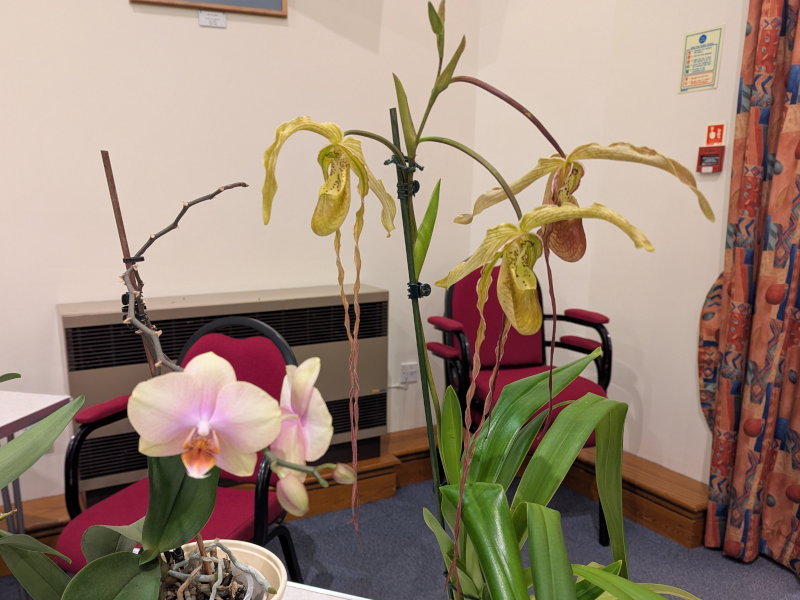
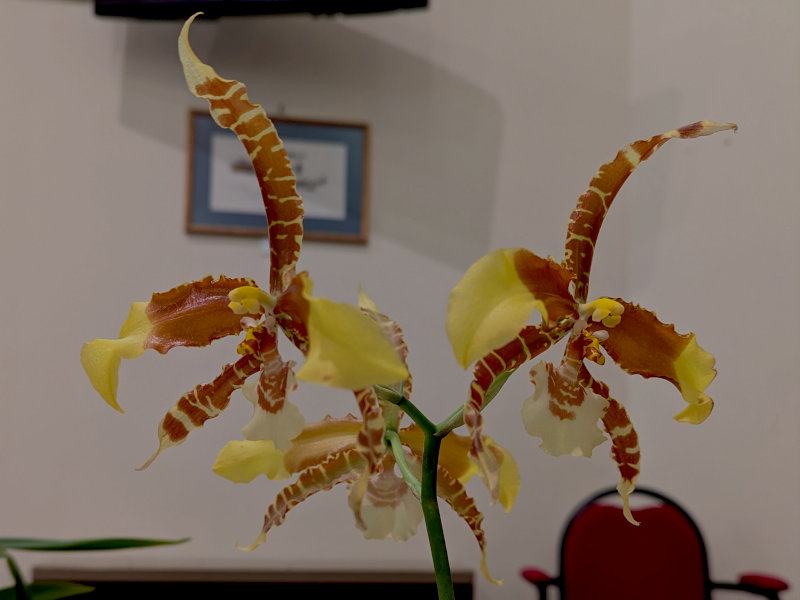
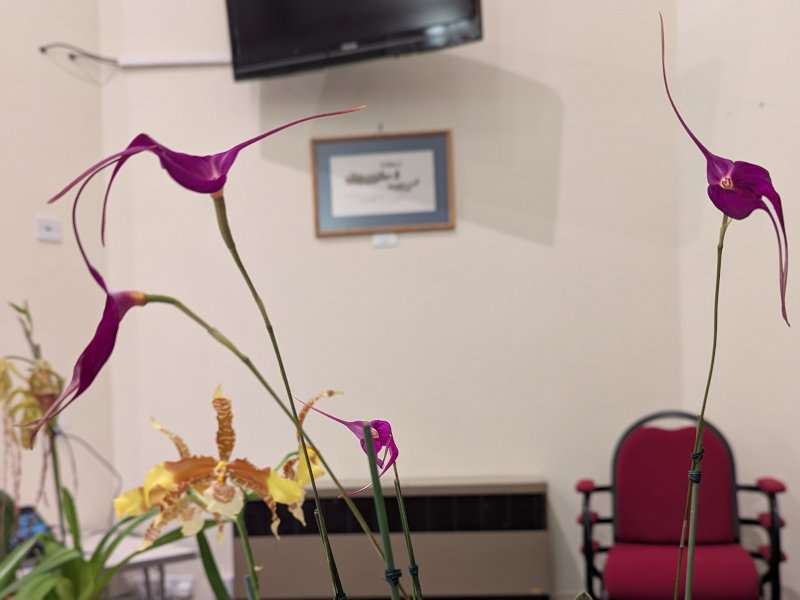
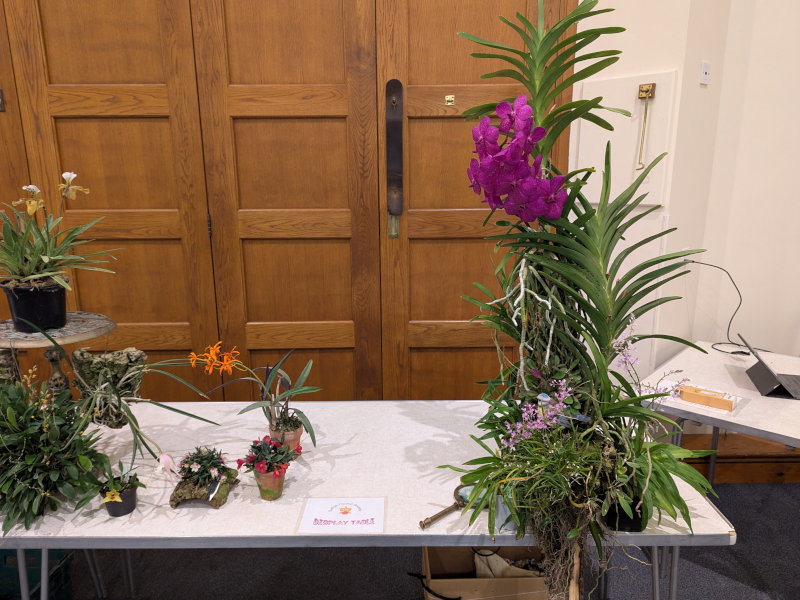
On the display tables, Tony Weavers won the Novices table with his Phragmipedium Grande, and David Kohn and Bill Gardiner tied for first place on the Winners table with their Rossioglossum grande and Masdevallia Machu Picchu respectively.